Breakfast at the Campsite: Fresh Rolls, Coffee and Just Enough Ambition
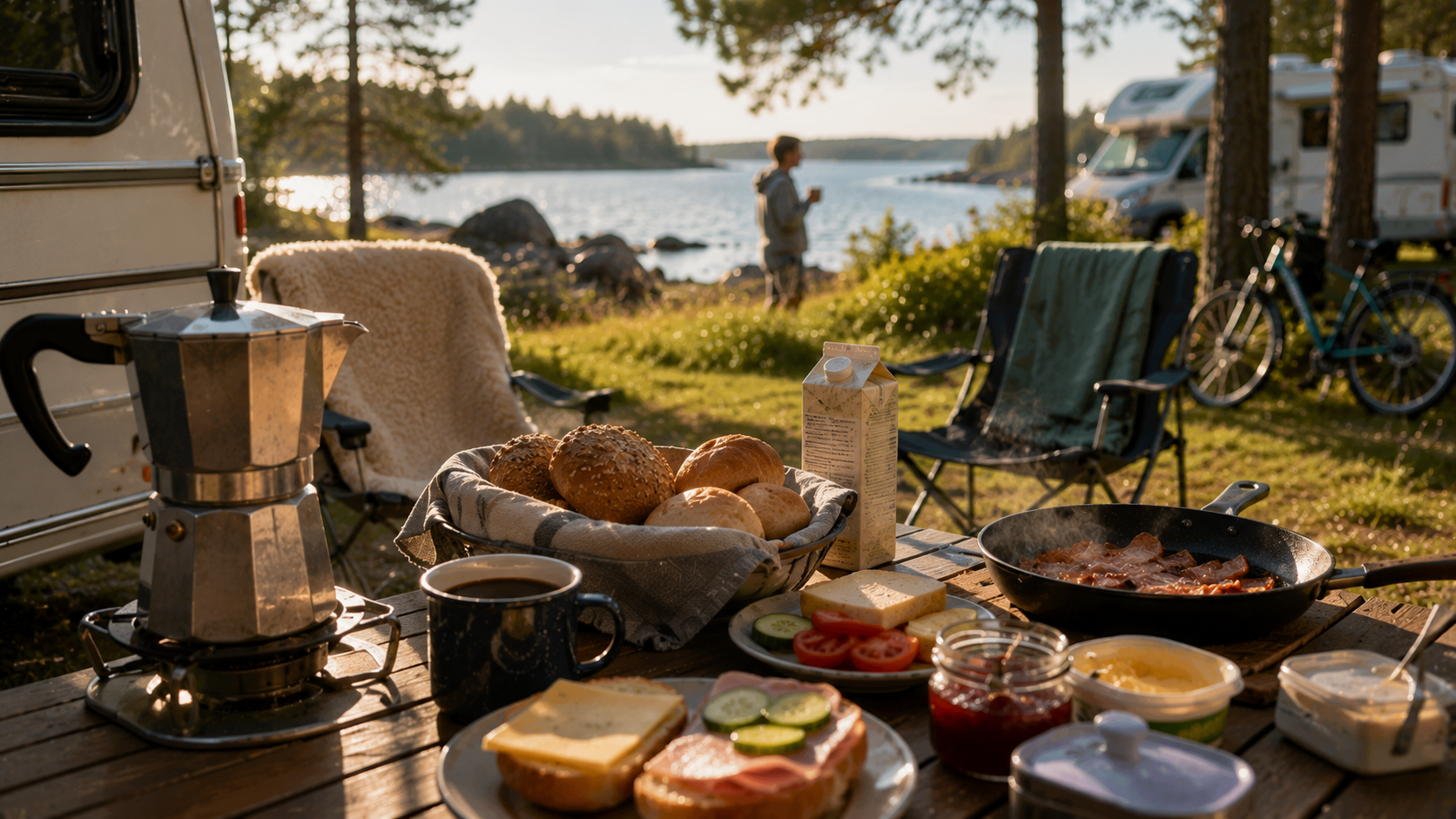
Breakfast at the Campsite: Fresh Rolls, Coffee and Just Enough Ambition. At home, breakfast is often something you eat before the day begins. At a campsite, the same meal can suddenly become a small ritual. Coffee tastes better outdoors, someone walks to the campsite shop for fresh rolls and someone else tries to fry bacon in a dressing gown without waking the entire neighbourhood. But campsite breakfast does not need to be bigger, better or more complicated than breakfast at home. It only needs to suit the kind of morning you are actually having.
Published: 7/29/2026 • By CampApp
Download the app here
Want to continue in CampApp? Download the app to save favourites, discover more campsites and get a better overall experience.


Not every campsite morning is the same
Some campsite mornings have no real schedule. The sun is already warming the awning, coffee can take its time and the biggest decision of the day is whether to go to the beach before or after lunch. Those mornings are perfect for bringing out the griddle, making pancakes or cooking eggs and bacon while the rest of the family slowly wakes up.
Other mornings are different. The amusement park opens soon, the ferry will not wait and somebody still cannot find their shoes. On those mornings, yoghurt, cereal and a sandwich are not a failure. They are good logistics.
On moving day, you want breakfast that does not create a mountain of dishes five minutes before the power cable needs to be packed away. On a rainy morning, something warm may be worth the effort. The first morning at a new campsite is often slightly chaotic, while the last one usually becomes an unusual buffet designed to use up two eggs, half a yoghurt, three slices of cheese and whatever remains of the strawberries.
The best campsite breakfast is therefore not a particular dish. It is the breakfast that fits the pace of the day.
The same breakfast as at home can be exactly right
There is no rule saying that campsite breakfast must be more adventurous than breakfast at home. In fact, starting the day with something safe and familiar can be a relief.
Yoghurt and cereal, sandwiches, porridge, eggs, juice and coffee work just as well in a caravan as they do at the kitchen table. For families with children, there is also a major advantage in not turning breakfast into another experiment. If the children eat their usual sandwich without negotiation, the holiday has already begun well.
Simple breakfasts are also easy to shop for, need little preparation space and create less washing up. In a caravan, where the kitchen counter often serves as storage, serving area and temporary charging station at the same time, that matters.
Sometimes the most relaxing part of the holiday is simply getting everyone fed without consulting a recipe.
A quick breakfast is not an inferior breakfast
Breakfast at the campsite does not always need cooking. Some mornings, the main goal is to eat something and leave before the whole morning disappears.
Prepared sandwiches, boiled eggs from the previous evening, yoghurt, overnight oats, rolled flatbreads, fruit, nuts or a banana are all useful when time is limited. Coffee and a fresh roll may be more than enough, especially when lunch is part of the day's excursion.
A little preparation the night before can help. Boil eggs, prepare overnight oats or place the breakfast items where they are easy to reach, so the morning does not begin with somebody emptying half the refrigerator in search of the butter.
A quick campsite breakfast is not a defeat. Sometimes it is the difference between reaching the beach in good time and still searching for the butter knife at 10:47.
When breakfast is allowed to take all morning
Then there are mornings when you genuinely want to make more of breakfast. Not because it is efficient, but because you have the time.
Pancakes, eggs and bacon, omelettes, French toast or fried bread can turn breakfast into part of the holiday itself. With a large griddle, breakfast for the whole family can be cooked outside, with eggs on one side, bacon in the centre and bread warming around the edge.
A long campsite breakfast is not always rational. It can create a surprising amount of washing up for food that disappears in a few minutes. But sometimes that is exactly why you do it. Nobody needs to hurry and cooking is allowed to become part of the morning instead of an obstacle before the next activity.
For adult campers, breakfast can almost be the holiday itself. Coffee without a schedule, another cup when the first is finished and a bread roll scattering crumbs across the entire camping table. It does not need to be more luxurious than that.
Fresh bread from the campsite shop is its own kind of luxury
Fresh bread at a campsite is almost an institution.
Somebody gets the job of walking to the shop. The children may come along and return with bread, juice and at least one thing nobody intended to buy. Meanwhile, the coffee is ready and breakfast suddenly feels more like a hotel than everyday life, even though nobody has done anything particularly complicated.
It is difficult to overstate the value of a campsite shop selling fresh bread in the morning. The difference between having to organise breakfast and simply collecting bread can feel surprisingly large when you are on holiday.
Check whether the bread needs to be ordered the previous evening and what time the shop opens. At popular campsites, going early may be wise. Bring a cloth bag too, unless you want the first walk of the morning to end with somebody trying to balance eight loose rolls against their chest.
The golden rule of campsite breakfast is simple: hope for fresh bread, but keep crispbread in reserve.
Breakfast with children does not need to become a project
Breakfast with children at a campsite is often less about variety and more about getting something into them before they disappear towards the playground.
Pancakes can be brilliant when there is time and patience. They are less brilliant when everyone is already hungry and the first one has torn into three pieces. At that point, yoghurt, a sandwich, fruit or a boiled egg are far more practical.
It helps to keep an emergency breakfast ready. A banana, small yoghurt or sandwich can rescue the mood while the more ambitious breakfast is being cooked.
If you are making hot food, cook the children's portions first. That gives the adult at the frying pan at least a chance of eating breakfast before lunchtime.
And if the children want the same cereal every morning of the entire holiday, perhaps that is not a battle worth fighting. Variety can be saved for the ice cream.
Breakfast depends on how you are staying
In a caravan or motorhome, there is usually a refrigerator, hob, water and more storage. Breakfast can therefore be similar to home, with eggs, yoghurt, porridge, bread and coffee. You can also choose whether to cook inside or outside. Inside is convenient. Outside prevents the curtains smelling of bacon for the rest of the week.
In a tent, simplicity matters more. Preparation space is limited, cold storage may be basic and weather has greater influence. Crispbread, porridge, fruit, nuts, spreadable cheese, prepared sandwiches and simple stove cooking often work best.
In a cabin, breakfast can be much like home depending on the equipment. Breakfast baskets, fresh bread and slower mornings work particularly well there.
At a motorhome stop or during a road trip, speed usually wins. Coffee, yoghurt, boiled eggs and sandwiches allow you to move on without conducting a full kitchen operation first.
Breakfast is the easiest way to eat locally
Breakfast is a good place to begin if you want local food to become part of the holiday. You do not need to cook an elaborate dinner for the meal to reflect the place.
Eggs from a farm shop, bread from a local bakery, strawberries from a roadside stall, honey, jam, local cheese or apple juice can make a large difference with very little work.
Near the coast, smoked fish on bread may be exactly right. In an area with a local dairy, yoghurt or cheese may become the small discovery of the holiday. One or two local ingredients are often enough to make breakfast feel different from home.
Breakfast may be the easiest meal to let the destination influence.
Coffee first, everything else afterwards
There are families who function perfectly well without coffee in the morning. But there is no reason to make camping more difficult than necessary.
The brewing method matters less than having something simple enough to use before anyone becomes irritated. An electric coffee maker, French press, filter holder, moka pot or instant coffee can all work.
On an early moving day, a thermos can be invaluable. On a quiet morning, making coffee can take longer. And if the campsite has a café or shop, somebody else can take care of the entire process.
Coffee often tastes better outdoors, even when it is objectively exactly the same coffee as at home. It is one of camping life's more reliable mysteries.
Plan for the morning you are actually going to have
The easiest way to create a good campsite breakfast is to think briefly about it the evening before.
Are you driving on? Going on an excursion? Is fresh bread available? Does anything need preparing? How much washing up do you want? And is there actually any coffee left, or did it run out yesterday?
It does not need to become a detailed plan. The goal is simply to avoid building a long breakfast on a morning when everyone needs to be in the car within twenty minutes.
Keep a few basic ingredients in reserve. Oats, crispbread, spreadable cheese, coffee, cereal, nuts or eggs can rescue the morning when the shop is closed, the bread is sold out or the weather makes nobody willing to go outside.
The best breakfast is not always the most carefully planned.
Sometimes it is fresh bread in the morning sun.
Sometimes it is yoghurt eaten quickly before leaving.
And sometimes it is pancakes, eggs and bacon on the griddle because the time, weather and mood happen to be exactly right.
The only thing that matters is choosing an ambition level that suits the morning.
Read also
Camping with Teenagers: Let the Holiday Grow Up a Little
When children become teenagers, camping holidays change. The playground may no longer be enough, and yet another “cosy little outing” can be met with a look that says everything. But with more involvement, more flexibility and some respect for personal space, camping with teenagers can still be really good.
First Time in a Motorhome: Does Everything Really Have to Be Level?
A first motorhome trip is often a mixture of freedom, excitement and mild panic. You imagine drinking coffee beside a peaceful lake, but soon find yourself at a motorhome stop wondering whether the vehicle is leaning, how to empty the grey water and why the power cable is two metres too short. Relax. You do not need to know everything, buy everything or park perfectly level on your first attempt.
The History of the Caravan – How a Home on Wheels Became Part of Scandinavian Life
A caravan is much more than just a vehicle. For many people, it is a holiday cottage on wheels, a place where the holiday begins the moment it is hitched to the car. But where did it all start? From exclusive horse-drawn touring wagons to becoming a symbol of freedom, family holidays and the Scandinavian love of both adventure and comfort, the caravan has travelled a remarkable journey.