The History of the Caravan – How a Home on Wheels Became Part of Scandinavian Life
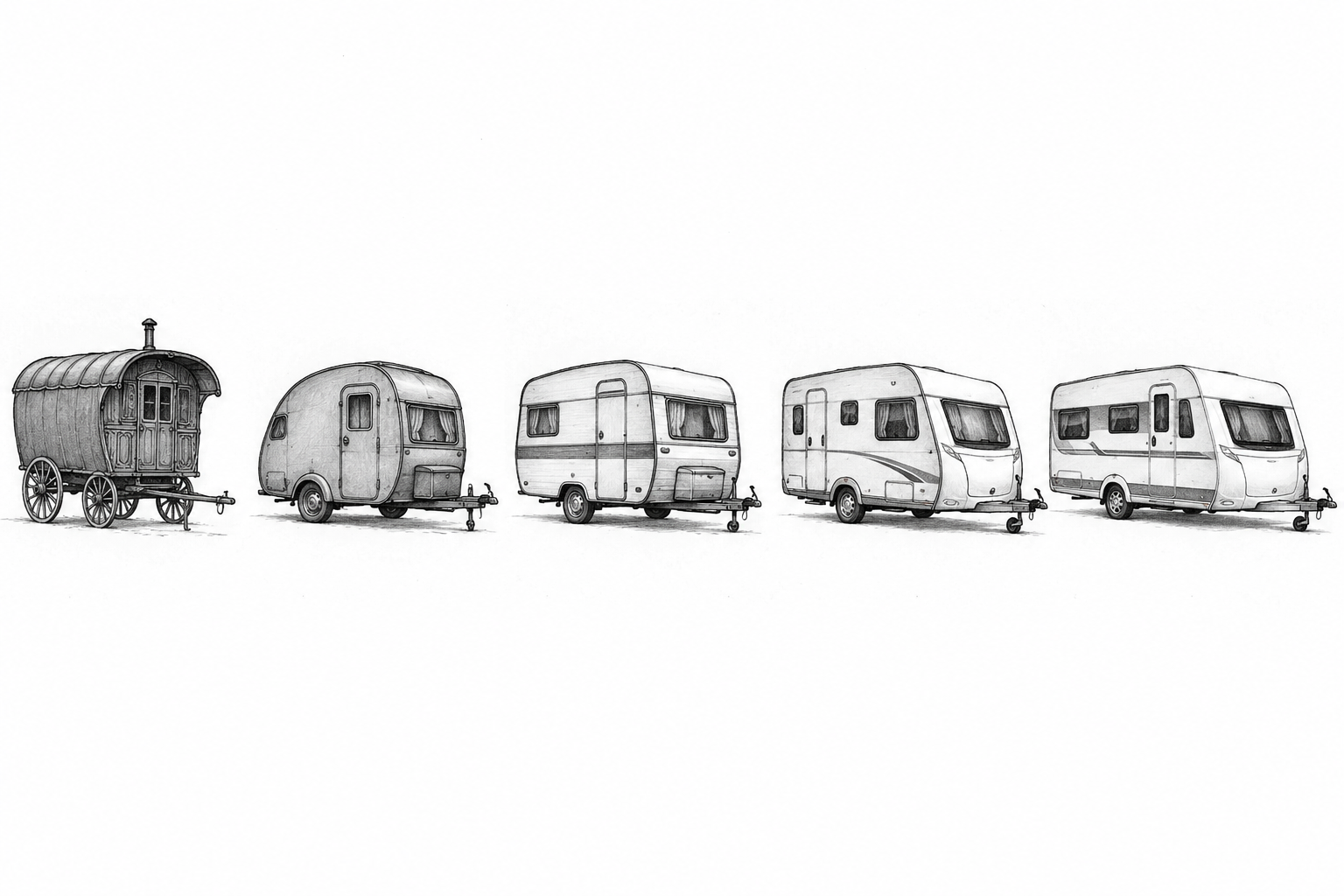
The History of the Caravan – How a Home on Wheels Became Part of Scandinavian Life. A caravan is much more than just a vehicle. For many people, it is a holiday cottage on wheels, a place where the holiday begins the moment it is hitched to the car. But where did it all start? From exclusive horse-drawn touring wagons to becoming a symbol of freedom, family holidays and the Scandinavian love of both adventure and comfort, the caravan has travelled a remarkable journey.
Published: 8/20/2026 • By CampApp
Download the app here
Want to continue in CampApp? Download the app to save favourites, discover more campsites and get a better overall experience.


From luxury for the few to holidays for the many
The idea of taking your home with you is much older than the car itself. As early as the 1880s, the British caravan The Wanderer was built, often regarded as the world's first purpose-built touring caravan. Pulled by horses, it allowed its owner to travel comfortably without relying on inns along the way.
Back then, a mobile holiday home was a luxury that only a handful of people could enjoy.
Yet the basic idea was exactly the same as it is today.
To take a little piece of home wherever the road leads.
When the car changed everything
It was not the caravan that transformed holidays.
It was the car.
After the Second World War, car ownership increased dramatically across Scandinavia. Suddenly, ordinary families could travel further than ever before, and holidays became accessible to many more people. Campsites evolved as well, adding roads, larger pitches and better facilities to welcome the growing number of motorists.
As the family car became a symbol of freedom, the caravan naturally followed.
It solved a very practical problem. Families could travel wherever they wanted without giving up the comfort of their own bed, kitchen and daily routines.
The caravan became the summer cottage for people who did not want to choose just one destination.
SMV and the beginning of the Swedish caravan industry
Sweden was quick to develop its own caravan manufacturers, and one of the most iconic names is SMV from Örebro.
The company began serial production in 1948, and a few years later introduced the model that would become one of the country's best-known caravan designs.
The SMV Model 6.
Better known simply as...
"The Egg."
Its distinctive rounded shape turned it into an icon of Swedish caravan history, and beautifully restored examples still appear at vintage camping rallies today.
In many ways, the Egg symbolised the moment when caravanning became part of the Swedish summer tradition.
The garage that became KABE
Few Scandinavian manufacturers have a story as charming as KABE.
Everything started in 1958 when Kurt Blomqvist wanted to give his family a more comfortable alternative to sleeping in a tent. His solution was simple.
He built a caravan in his garage.
The first caravan attracted so much attention that it was sold before the family even had the chance to use it. So he built another.
The rest became Swedish industrial history.
The following year, the KABE Komet 250 was introduced and production began in earnest.
It is a story that feels wonderfully Scandinavian. A practical problem, a home garage and someone thinking, "Surely I can build something better myself."
The 1960s – when caravanning became mainstream
During the 1960s, caravanning truly became part of Swedish holiday culture.
More families owned cars. Paid holidays became longer. Campsites became more numerous and better equipped.
At the same time, several manufacturers that are still well known today entered the market.
Polar was founded in 1964 with the ambition of building caravans designed specifically for Nordic conditions. That same year, Cabby was established in Kristinehamn and became renowned for well-insulated caravans built to handle Scandinavian weather.
That says quite a lot about life in the north.
In southern Europe, camping was mostly about sunshine.
In Scandinavia, a caravan also had to cope with cold spring mornings, rainy autumn weekends and campers who believed Easter was the perfect time to start the season.
Good insulation, efficient heating and practical design quickly became part of the Scandinavian caravan identity.
The holiday home on wheels
It is impossible to tell the story of the caravan without also telling the story of post-war society.
As more families gained access to cars and longer holidays, entirely new opportunities opened up. One year the destination might be the west coast, the next the mountains, and the year after a quiet lakeside campsite.
Yet something always stayed the same.
The kettle was in the same cupboard.
The coffee mugs were exactly where they had always been.
The children slept in the same beds.
Whether the view overlooked dramatic cliffs, sandy beaches or a peaceful forest lake, the feeling remained unchanged.
You were home.
Just somewhere else.
The 1970s – the golden age of caravanning
If the 1960s laid the foundations, the 1970s firmly established the caravan as part of Swedish culture.
Sales grew rapidly as more and more families chose camping holidays. Campsites expanded with modern service buildings, electricity and better facilities, while awnings, folding chairs and evening barbecues became familiar sights across the country.
Many of the images people still associate with camping today were born during this period.
Children cycling between caravans.
Coffee beneath the awning.
The smell of dinner cooking outside.
Neighbours helping each other put up awnings.
They remain some of the strongest symbols of Scandinavian summer.
From simple holidays to comfortable living
Modern caravans are, of course, vastly different from the early models.
Heating, bathrooms, showers, spacious refrigerators, clever floorplans and modern materials have transformed them into highly comfortable holiday homes.
Yet the original idea has hardly changed.
People still want the freedom to bring their own little home wherever they travel.
The only real difference is that home has become rather more comfortable.
Caravan or motorhome?
In recent years, motorhomes have grown enormously in popularity, but caravans continue to occupy a unique place in camping life.
A motorhome often appeals to those who enjoy moving on every morning.
A caravan suits those who prefer to settle down, roll out the awning and create a base for several days, several weeks or even an entire season. The car becomes the vehicle for day trips while home remains exactly where it is.
They represent two different ways of travelling.
And both have their own charm.
A home on wheels that has travelled through generations
Much has changed since the first horse-drawn touring caravan rolled onto British roads almost 140 years ago.
Society has changed.
Campsites have evolved.
Caravans have become warmer, larger and far more comfortable.
But the central idea remains almost identical.
To pack your belongings, hitch up your caravan and head towards your next adventure without ever leaving the feeling of home behind.
Perhaps that is why caravans continue to hold such a special place in the hearts of so many campers.
They are not simply about travelling.
They are about taking home with you, wherever the journey leads.
Related links
Read also
Let the Place Decide Dinner
Camping is all about freedom. The freedom to stop where the view is beautiful, take a detour when a handmade sign catches your eye or discover a small village you had never planned to visit. So why not let that same freedom shape your meals? Instead of planning every dinner before you leave home, let the place you're visiting decide what ends up on your plate.
Camping with Dogs: A Holiday for the Whole Pack
Camping is often one of the easiest ways to travel with a dog. You bring your own accommodation, spend plenty of time outdoors and often have nature close by. But a truly good dog-friendly holiday is not just about whether dogs are allowed. It is about finding places where both humans and dogs can actually enjoy themselves.
Camping with Teenagers: Let the Holiday Grow Up a Little
When children become teenagers, camping holidays change. The playground may no longer be enough, and yet another “cosy little outing” can be met with a look that says everything. But with more involvement, more flexibility and some respect for personal space, camping with teenagers can still be really good.